Viewpoint
Recent Geopolitical Developments and the Irish CRE Market
April 16, 2026 10 Minute Read
Looking for a PDF of this content?
Outbreak of War in Iran
While the duration and trajectory of the conflict were initially uncertain, developments in the region have persisted longer than anticipated. The situation continues to evolve, with diplomacy, negotiations and tactical dynamics shifting frequently and often unpredictably. More recently, focus has turned to ceasefire proposals, including a 14-day truce that commenced on 8 April, which, albeit fragile, has contributed to a modest improvement in near-term market sentiment. Latest reporting suggests that negotiations towards a more durable settlement remain active.
Energy Prices & Interest Rates
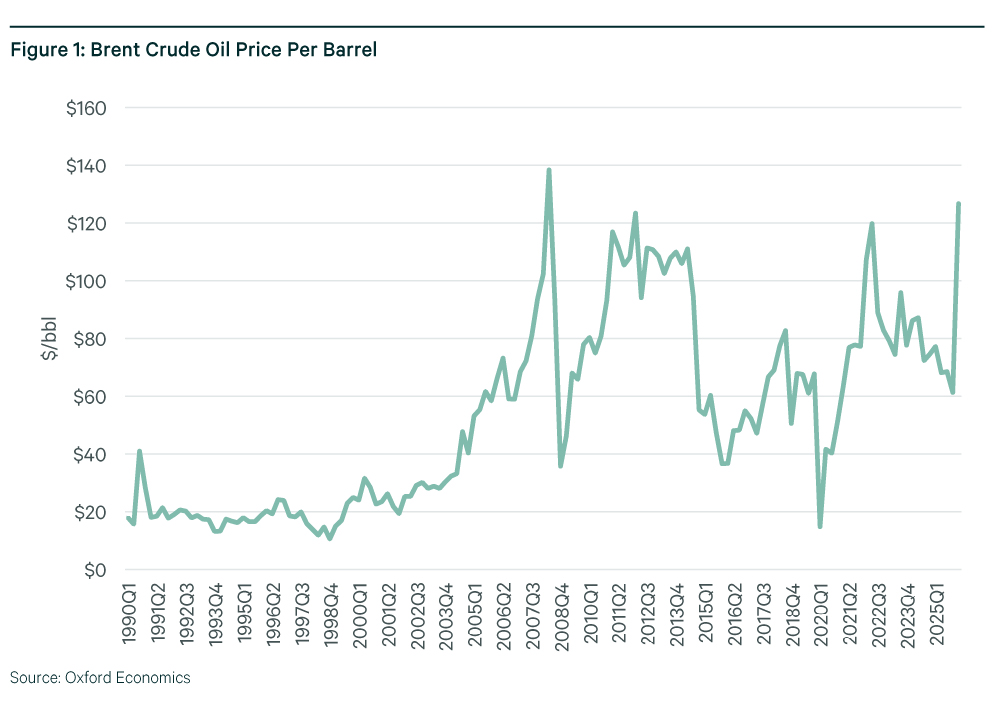
Restrictions on shipping through the Strait of Hormuz, which accounts for approximately 25–30% of global seaborne oil exports, had a pronounced impact on energy markets following the outbreak of the war. Brent crude prices rose sharply during Q1 2026, increasing from the low-$60s per barrel at the start of the year to levels above $120/bbl by late March. Following the announcement of the ceasefire, prices eased and have since stabilised below $100/bbl, though volatility remains elevated.
Higher energy costs have fed through to headline inflation in the euro area, with inflation rising to approximately 2.5% by the end of March, up from 1.9% in February. As the conflict intensified, markets briefly reassessed the outlook for monetary policy, pricing an increased probability of rate hiking by major central banks. While those expectations have softened in recent weeks amid improved geopolitical conditions, markets continue to factor in the possibility of base interest rate increases later in the year.
Ahead of any formal policy action, the impact has already been evident in funding markets. Debt costs increased meaningfully, with 5Y EURIBOR rates rising from approximately 2.20% and peaking at around 2.80% in late March, before easing modestly in early April. Longer-dated rates also moved out, with euro area sovereign yields widening following the outbreak of the conflict, reflecting higher inflation risk premia, before retracing part of that move post-8 April.
Uncertain Economic Outlook
These developments have introduced an additional layer of uncertainty into global, European and domestic economic outlooks. While it remains difficult to quantify the precise impact on growth, there is some marginal downside risk to Irish economic performance in 2026, with consumption and investment potentially softening as cost pressures rise and uncertainty persists.
That said, the Irish economic backdrop remains comparatively robust. Employment levels remain high, labour market conditions tight, and household consumption indicators resilient. Reflecting this, the Central Bank of Ireland revised its 2026 modified domestic demand forecast only marginally, from 3.0% to a range of 2.8–2.9%, noting that higher global energy prices could weigh on Ireland’s main trading partners and reduce external demand for the traded sector.
Impact on Real Estate Markets
Real estate’s relative illiquidity, compared with financial markets, means that pass-through effects from higher energy prices and interest rate volatility typically emerge with a lag. At this stage, the impact of heightened uncertainty in the Irish market is being felt primarily through sentiment and financing conditions, rather than through material changes in occupier demand or development activity. Historically, geopolitical shocks of this nature tend to have a more limited and delayed impact on occupational real estate markets, with leasing activity typically proving more resilient than capital markets in the near term and this has been the case in the Irish market to date.

Development Activity
While higher construction and energy costs are being closely monitored across the development market, there is no clear evidence at this stage of projects being paused or cancelled. Activity on sites already under construction continues, with developers and funders adopting a more cautious approach to costs, pricing and pre-letting thresholds.
- Residential development: Residential activity continues to provide near-term comfort. 3,423 residential units commenced in February 2026, the highest monthly total since December 2024. Rolling 12-month commencements now stand at almost 19,700 units nationally. It appears that the change in the regulatory environment – particularly around rent control and VAT reductions - has led developers to refocus on apartment construction in the early part of this year.
- Office development: The current cohort of office schemes under construction remains on track to complete over the coming months. Despite increased uncertainty, developers continue to engage actively with occupiers on pre-letting discussions for well-located, high-quality buildings.
- Industrial, logistics and hotels: Development pipelines across industrial/logistics and hotels remain active, supported by strong occupational fundamentals and limited availability of modern stock.
Occupational Markets
Historically, geopolitical shocks of this nature tend to have a limited and lagged impact on occupational real estate markets.
Office markets:
Occupational activity across the Dublin office market remained resilient in Q1. Demand has held up particularly well, supported by a steady flow of notable transactions — including a large public-sector letting at Coopers Cross to TII — alongside a number of high-quality city-centre buildings that are now reserved. Rental tone continues to firm for best-in-class space, and developers remain intent on progressing schemes already under construction or with active planning permissions.
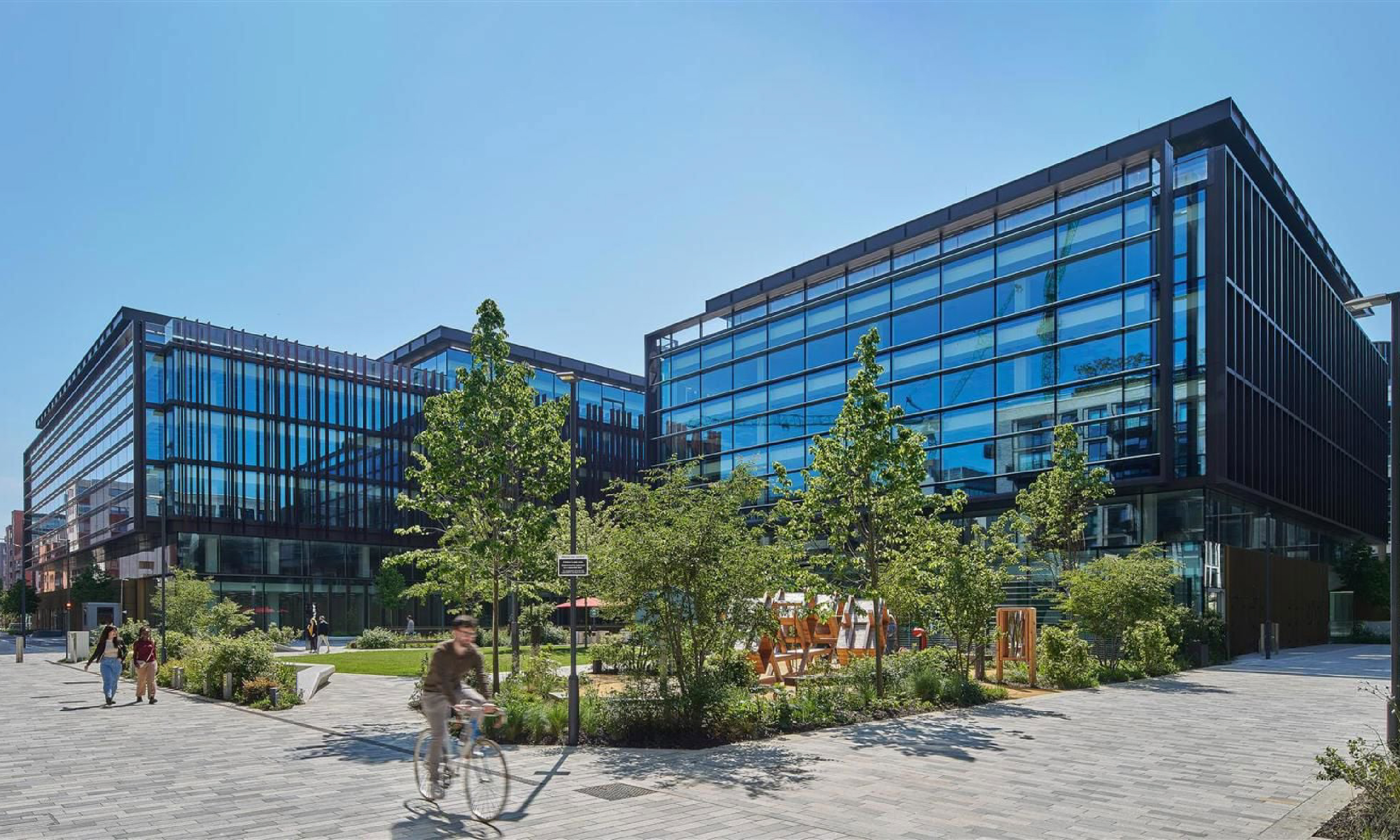 Coopers Cross
Industrial & logistics:
Industrial & logistics activity has followed a similar trajectory, albeit Q1 was slower than historical norms. Notable lettings included Sims Lifecycle Limited at Vantage Business Park. Large developments such as Nexus Logistics Park continue to progress amid strong occupier interest. While the sector is more exposed to rising energy costs and potential pressure on the consumer economy, activity to date suggests the impact has been felt more through sentiment than through any material slowdown in demand.
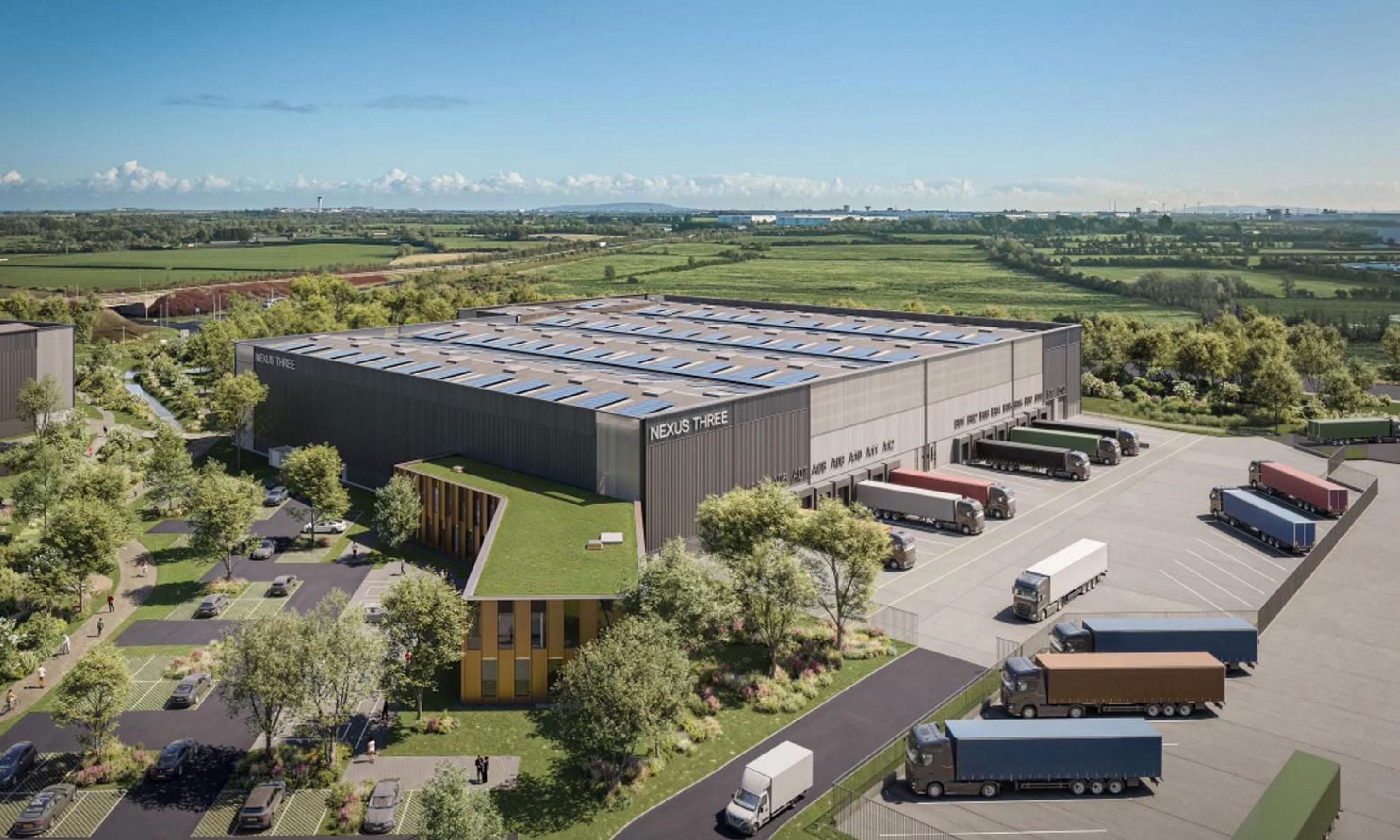 Nexus Logistics Park
Investment Markets
Investment markets tend to react more quickly to periods of uncertainty, given their forward-looking nature and the immediate impact of higher debt costs on pricing. However this disruption has resulted in a more cautious tone in early 2026 where volumes were slightly lower than anticipated, though the majority of transactions remain actively progressing. Notably, the Irish real estate market has not typically attracted a material amount of capital from Middle East sources, being primarily made up of European, North American and domestic investors.
Q1 Transactions:
- Irish investment volumes totalled just over €440 million, supplemented by c. €100 million allocated to a large-scale healthcare pan-European M&A transaction involving eight Irish assets (the merger of Aedifica and Cofinimmo).
- The largest deal of the quarter was the sale of Newmarket Yards, a 413-unit PRS scheme in Dublin 8, acquired by GIC for €212 million.
- IRES REIT also completed a €31.75 million forward purchase of 77 apartments in Naas, Co. Kildare. As anticipated, the residential sector accounted for the greatest proportion of investment spend, reflecting its defensive characteristics and continued institutional appeal.
Yields and Pricing
There is no clear evidence yet of yield shifts in the Irish market, albeit pricing is under increased scrutiny as higher debt costs feed into underwriting models.
Residential yields continue to display lower sensitivity than most other sectors, both in Ireland and across European and US markets. This reflects the needs driven nature of housing demand.
Other asset classes are expected to show greater differentiation in pricing. That said, there is a case for some yield compression in prime Dublin office assets, and to a lesser extent logistics, which will become clearer as some notable ongoing transactions progress. For now, yields are being held stable across sectors as deal activity continues.